Emerging Frontiers

On-Orbit Servicing
Companies developing spacecraft capable of refueling, repairing, and upgrading satellites already in orbit. These capabilities extend asset lifespans and reduce the need for costly replacement launches, creating a new category of space logistics.
Space Manufacturing
Microgravity environments enable production of specialized materials, pharmaceuticals, and fiber optics with properties difficult to replicate on Earth. Early commercial contracts are emerging from research institutions and precision manufacturers.

Debris Remediation
The accumulation of defunct satellites and spent rocket stages presents operational hazards for active spacecraft. Remediation ventures are developing capture technologies and deorbit services, supported by regulatory pressure and insurance requirements.
Lunar Infrastructure
Artemis program activities and commercial lander deployments are establishing presence on the lunar surface. Supporting infrastructure for power, communications, and resource extraction represents a long-dated but structurally significant opportunity.
Beyond Traditional Boundaries
New commercial activities reshaping the space economy

Established space sectors like launch and communications satellites are
now joined by emerging activities that expand the addressable market.
On-orbit servicing, space-based manufacturing, debris remediation, and
lunar infrastructure each represent distinct commercial propositions
with unique risk profiles.
Analytical reviews of these frontiers examine technical feasibility, customer readiness, and regulatory frameworks. Many ventures remain pre-revenue, supported by government contracts, research grants, and strategic partnerships rather than commercial sales.
Personal consultations help participants distinguish between activities with near-term revenue visibility and those requiring extended development timelines. Understanding this spectrum prevents misalignment between expectations and actual commercial progress.
Market Evolution
The space economy is transitioning from a government-dominated enterprise to a
commercially driven ecosystem. This shift creates new analytical challenges. Government
contracts provided predictable revenue but limited growth potential. Commercial markets
offer larger addressable opportunities with greater volatility and competitive
intensity. Analytical reviews must account for this transition when evaluating companies
with mixed revenue streams. Some entities remain heavily dependent on institutional
customers while pursuing commercial diversification. Others have achieved substantial
private sector revenue but retain exposure to procurement cycles. Personal consultations
explore how these revenue compositions align with individual preferences for stability
versus growth. The lunar surface presents a specific case study in market evolution.
Current activity is almost entirely government-funded through national space agency
programs. Commercial landers and habitat concepts anticipate future demand from research
institutions, resource extraction ventures, and eventually tourism operators. Analytical
reviews assess the credibility of these demand projections and the timeline for
transition from public to private funding. Debris remediation illustrates another
evolutionary pattern. The operational hazard is widely acknowledged, but the business
model remains unclear. Who pays for remediation services? Satellite operators, insurers,
regulators, or taxpayers? Each funding source implies different revenue timing, contract
structures, and political dependencies. Analytical reviews examine these structural
questions rather than assuming demand will materialize automatically. Space
manufacturing faces similar commercialization challenges. Technical demonstrations have
validated production capabilities for specific materials. Scaling these processes to
commercial volumes requires additional capital, customer qualification, and regulatory
approval. The gap between laboratory success and commercial deployment is where
analytical scrutiny is most needed. Personal consultations help participants calibrate
their expectations against documented progress rather than aspirational timelines.
Risk Awareness
Acknowledging uncertainty in frontier space activities
Emerging space sectors carry risks that differ materially from established markets. Technical failures, funding shortfalls, regulatory delays, and market development disappointments occur with greater frequency and severity. Analytical reviews name these risks explicitly rather than burying them in footnotes.
Technology Risk
Novel engineering approaches may fail at scale, requiring redesign and delaying commercial timelines significantly.
Funding Risk
Pre-revenue ventures depend on continued investor confidence and may face down rounds or liquidation if milestones slip.
Regulatory Risk
Unsettled legal frameworks for orbital debris, spectrum use, and lunar activities create compliance uncertainty and potential operational restrictions.
Market Risk
Projected customer demand may materialize more slowly than anticipated, extending the path to sustainable revenue and profitability.
Participant Considerations
Individuals exploring frontier space sectors should assess their own capacity for
uncertainty. These activities may experience extended periods without measurable
commercial progress. Capital commitments may be illiquid for years. Regulatory
developments could reshape competitive dynamics unpredictably. Analytical reviews
provide structured information about these possibilities. They do not eliminate
uncertainty but make it visible and discussable. Personal consultations then explore how
much uncertainty a given participant is prepared to accommodate, given their broader
financial circumstances and psychological disposition. Some participants find the
potential for transformative outcomes justifies accepting substantial ambiguity. Others
prefer sectors with clearer near-term revenue visibility, even if growth ceilings are
lower. Neither preference is superior; the analytical process simply ensures alignment
between expectations and actual sector characteristics. The most common misalignment
occurs when promotional materials emphasize technological possibilities while
understating commercial timelines. Analytical reviews correct this imbalance by
documenting verified milestones and distinguishing between accomplished facts and
projected outcomes. Participants then make informed choices based on their own criteria
rather than externally supplied enthusiasm.
Frontier Sectors
Visual overview of emerging commercial space activities

Orbital Servicing
Autonomous and remotely operated vehicles extending the operational life of
existing satellites through refueling, repair, and component replacement
missions.
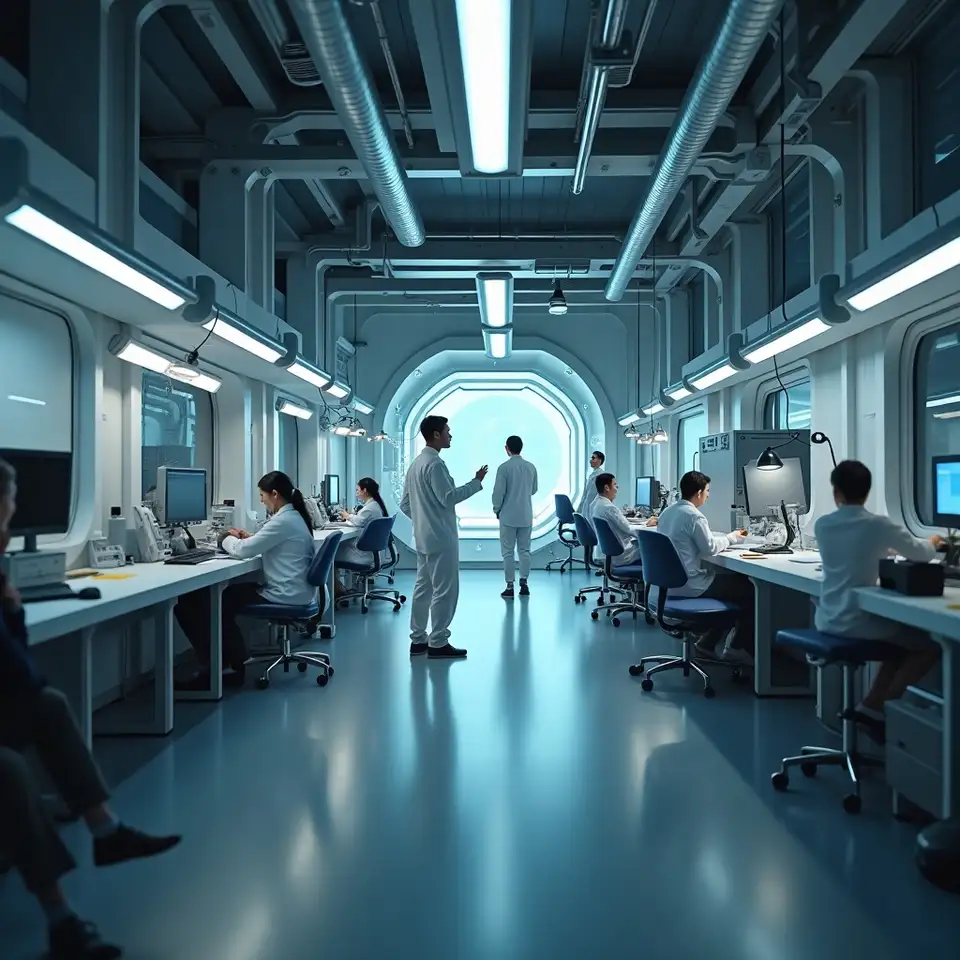
In-Space Production
Specialized manufacturing processes leveraging weightless conditions to produce pharmaceuticals, fiber optics, and advanced materials with superior properties.

Debris Remediation
Active removal of defunct satellites and spent rocket stages to preserve orbital
environments and protect operational spacecraft from collision hazards.
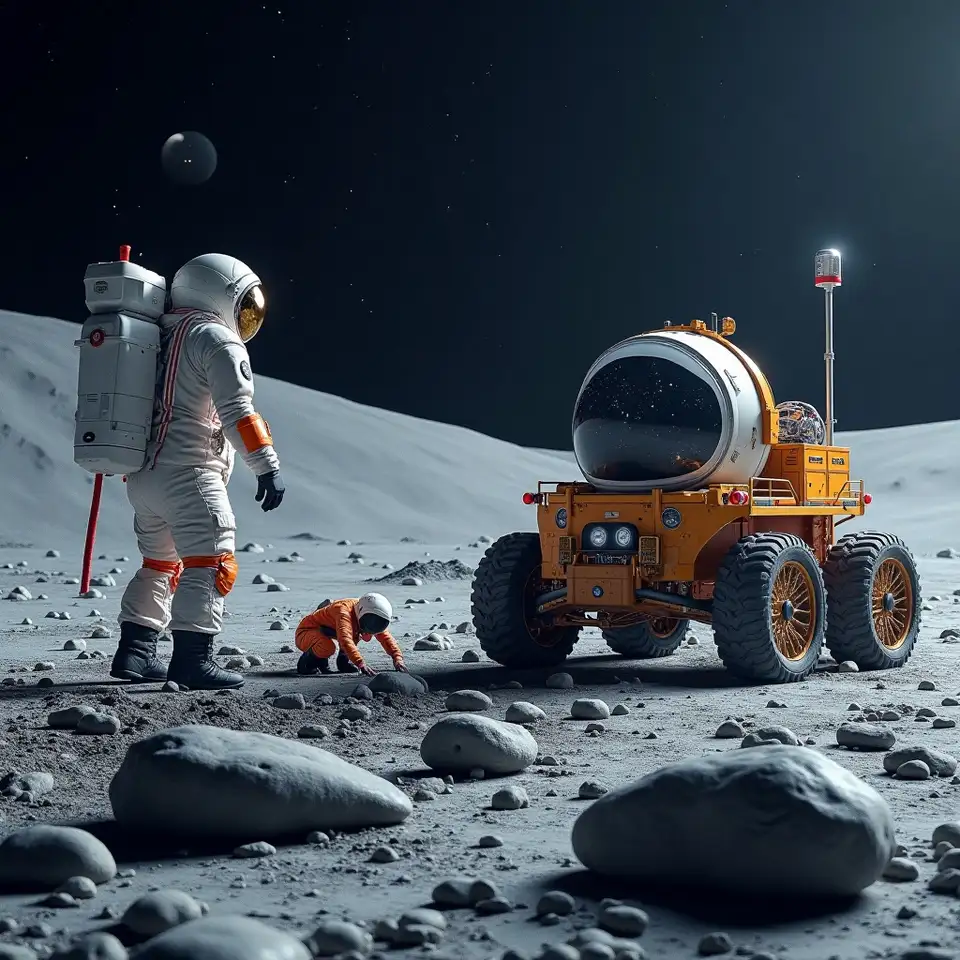
Lunar Activity
Commercial and scientific operations on the lunar surface including resource prospecting, infrastructure deployment, and support for sustained human presence.